Sistine Chapel History Timeline
Trace the chapel's development from 15th-century construction through Michelangelo's commissions, papal conclave tradition, and modern restoration.

Trace the chapel's development from 15th-century construction through Michelangelo's commissions, papal conclave tradition, and modern restoration.
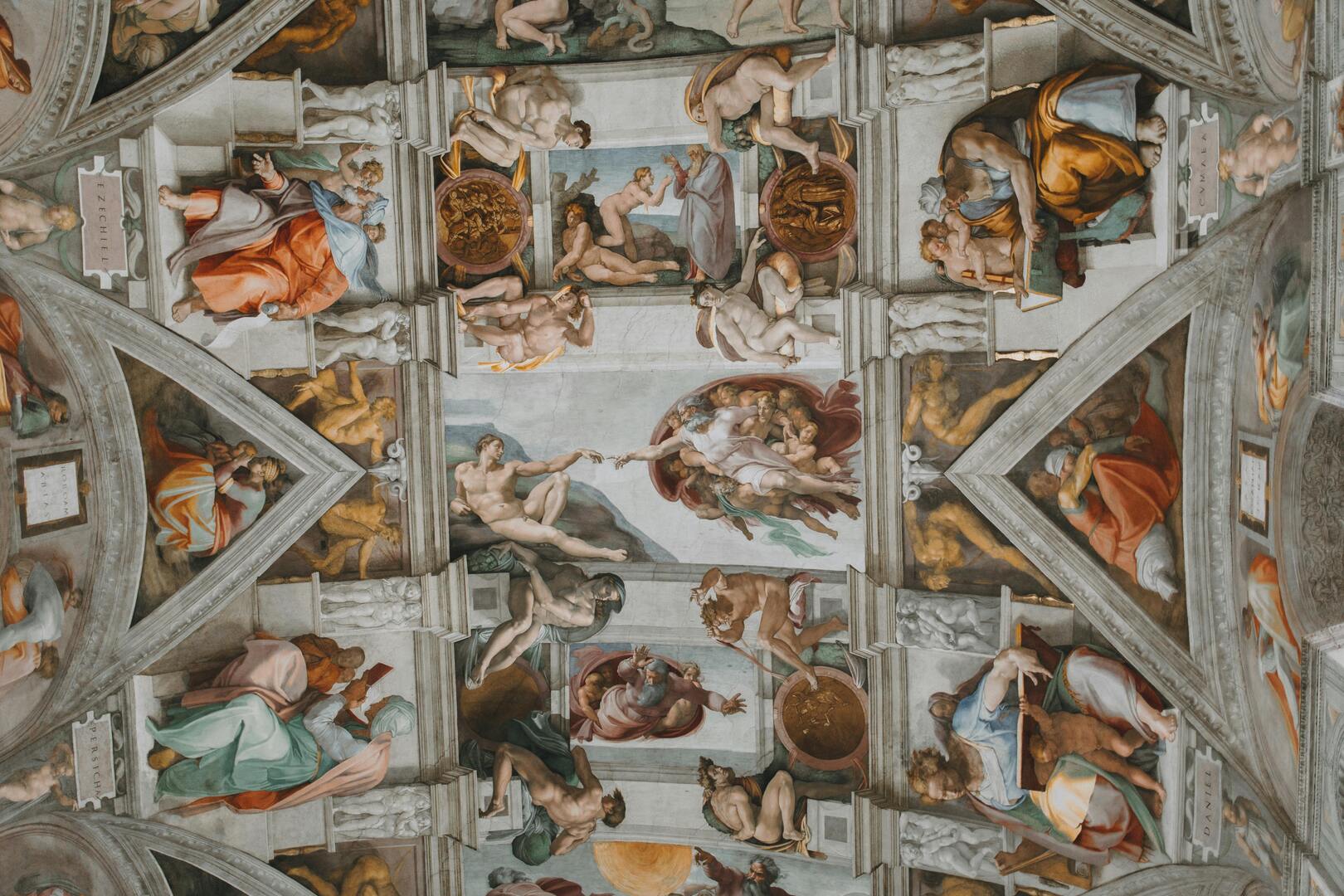
Built for Pope Sixtus IV, the chapel became the spiritual center of papal ceremony. Its architecture provided the frame for major fresco commissions that transformed it into a milestone of Renaissance art.
Michelangelo's ceiling (1508-1512) and later The Last Judgment (1536-1541) redefined monumental painting. Over centuries, the chapel remained central to conclaves and major liturgical events.
Late 20th-century conservation removed centuries of grime and revealed vibrant colors, helping modern visitors experience the frescoes with greater visual clarity.
Explore other highlights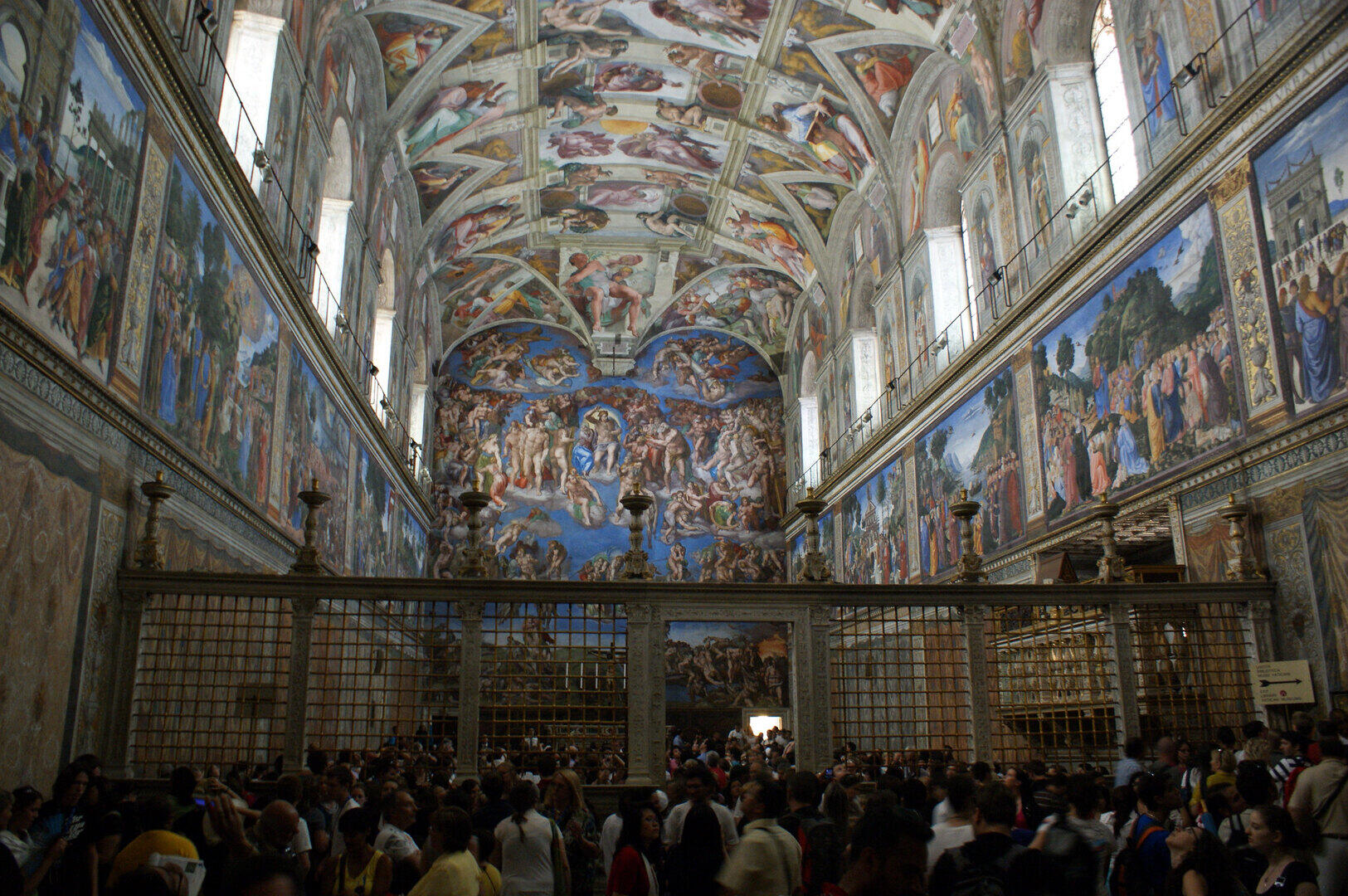
The chapel is commissioned by Pope Sixtus IV and established as a papal ceremonial site.
Michelangelo paints Genesis scenes including the iconic Creation of Adam.
The altar wall receives one of the most dramatic religious frescoes in art history.
Long-term restoration clarifies original palette and secures the frescoes for future generations.
Successive popes shaped the chapel's decoration and ceremonial role.
Large fresco programs depended on teams, materials, and highly organized staging.
The chapel remains the defining venue of papal election traditions.
Millions visit each year through controlled museum routes and timed entry systems.
