Michelangelo's Ceiling Masterpiece
Stand beneath the most famous fresco cycle in the world and explore how Michelangelo transformed the Sistine Chapel ceiling into a visual narrative of Genesis.

Stand beneath the most famous fresco cycle in the world and explore how Michelangelo transformed the Sistine Chapel ceiling into a visual narrative of Genesis.
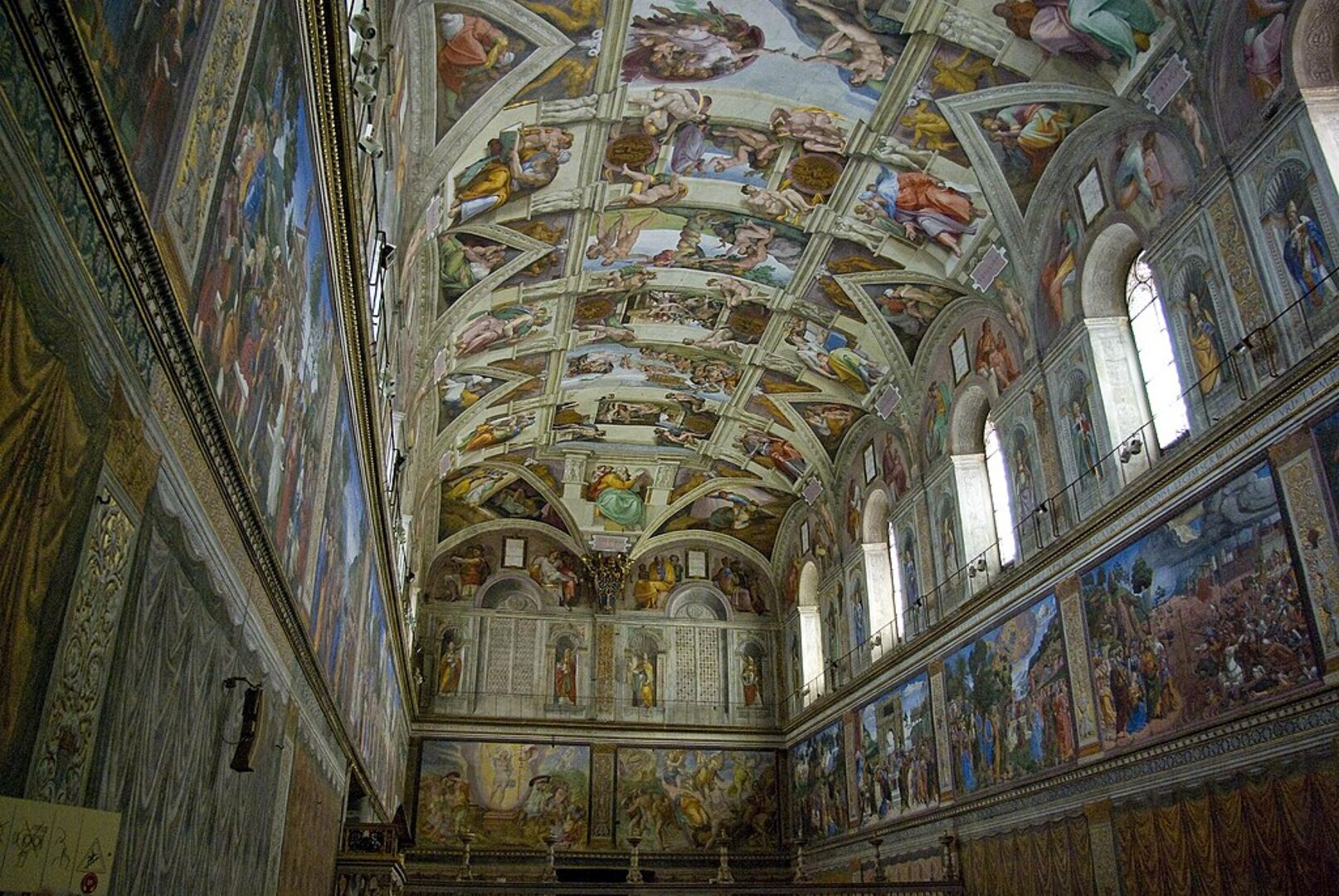
Commissioned by Pope Julius II, the ceiling project reshaped Western art. Michelangelo arranged prophets, sibyls, ignudi, and biblical stories into a monumental program that links theology, human anatomy, and architectural illusion.
The central panels move from Creation to Noah, with the Creation of Adam becoming one of the most recognized images in history. Color, gesture, and composition guide the eye across the vault and reward close study.
Modern restoration revealed luminous pigments and subtle transitions that had long been hidden by soot and varnish, helping visitors understand Michelangelo's original dramatic intent.
Explore other highlights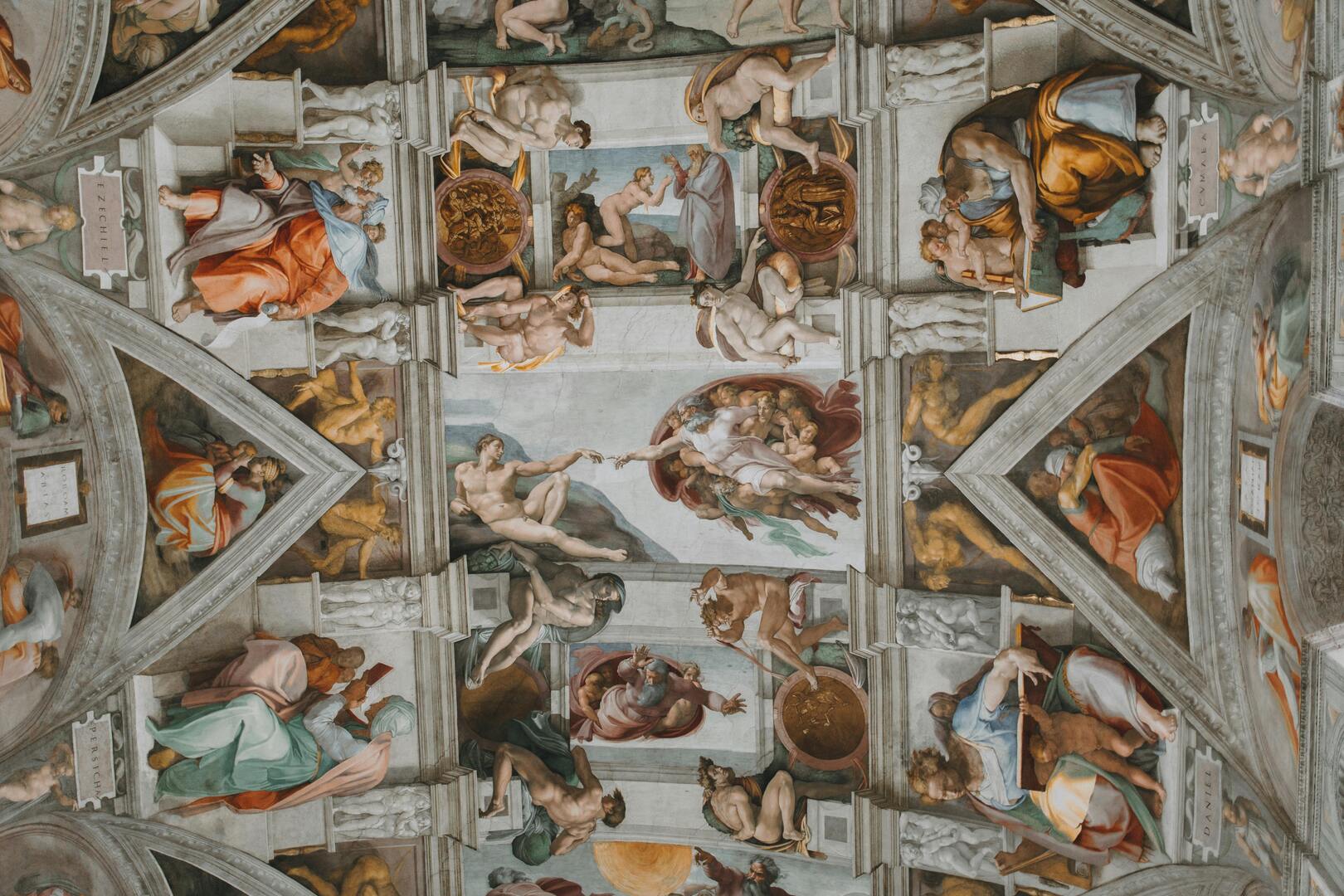
The near-touching hands symbolize divine spark and human potential, framed by a composition that balances stillness with tension.
Nine scenes trace creation, fall, and flood, creating a theological sequence read along the chapel axis.
Large seated figures around the vault embody prophetic expectation and provide the program's dramatic rhythm.
Late 20th-century conservation restored brightness and depth, transforming how visitors perceive the frescoes today.
Begin near the chapel entry to follow the narrative progression and appreciate shifts in scale.
Guides explain symbolism, commissions, and artistic choices that are easy to miss in a crowded setting.
Michelangelo's sculptural approach gives figures mass and motion rarely achieved in fresco cycles.
Silence and no-photography policies preserve the sacred atmosphere and improve collective viewing.
