The Last Judgment Fresco
Explore Michelangelo's monumental altar wall fresco, painted between 1536 and 1541, where theology, movement, and emotion merge into one of the most powerful works of Renaissance art.

Explore Michelangelo's monumental altar wall fresco, painted between 1536 and 1541, where theology, movement, and emotion merge into one of the most powerful works of Renaissance art.
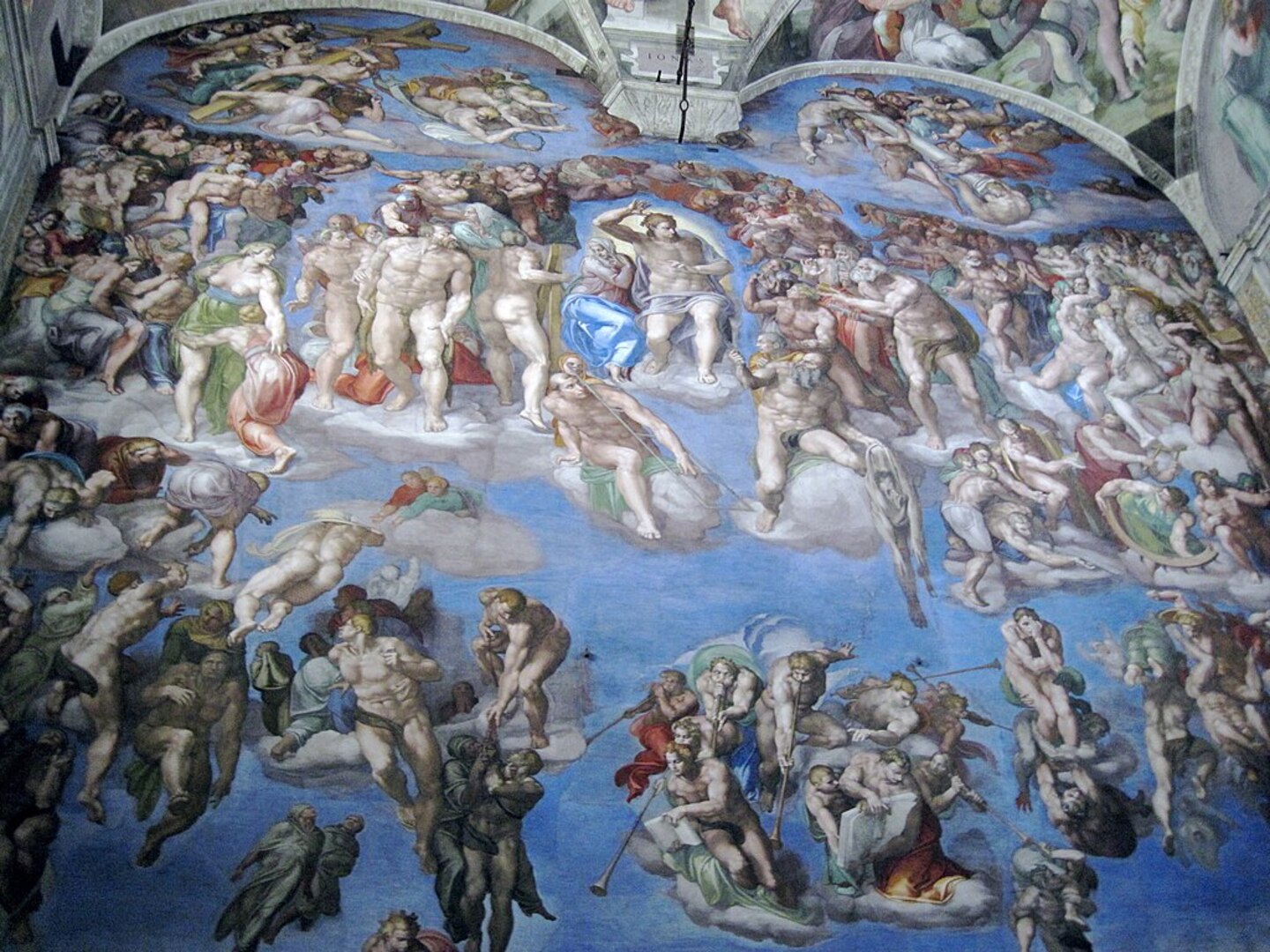
Created decades after the ceiling, The Last Judgment reflects Michelangelo's mature style: densely packed bodies, dramatic twists, and a spiritual intensity shaped by political and religious upheaval.
At the center, Christ judges humanity in a vortex of rising and falling souls. Saints, martyrs, angels, and the resurrected form an energetic composition that transforms the chapel's east wall into a cosmic stage.
The fresco also reveals changing church sensibilities, including later interventions to cover nudity. These layers of history make the wall both an artwork and a record of evolving theology.
Explore other highlights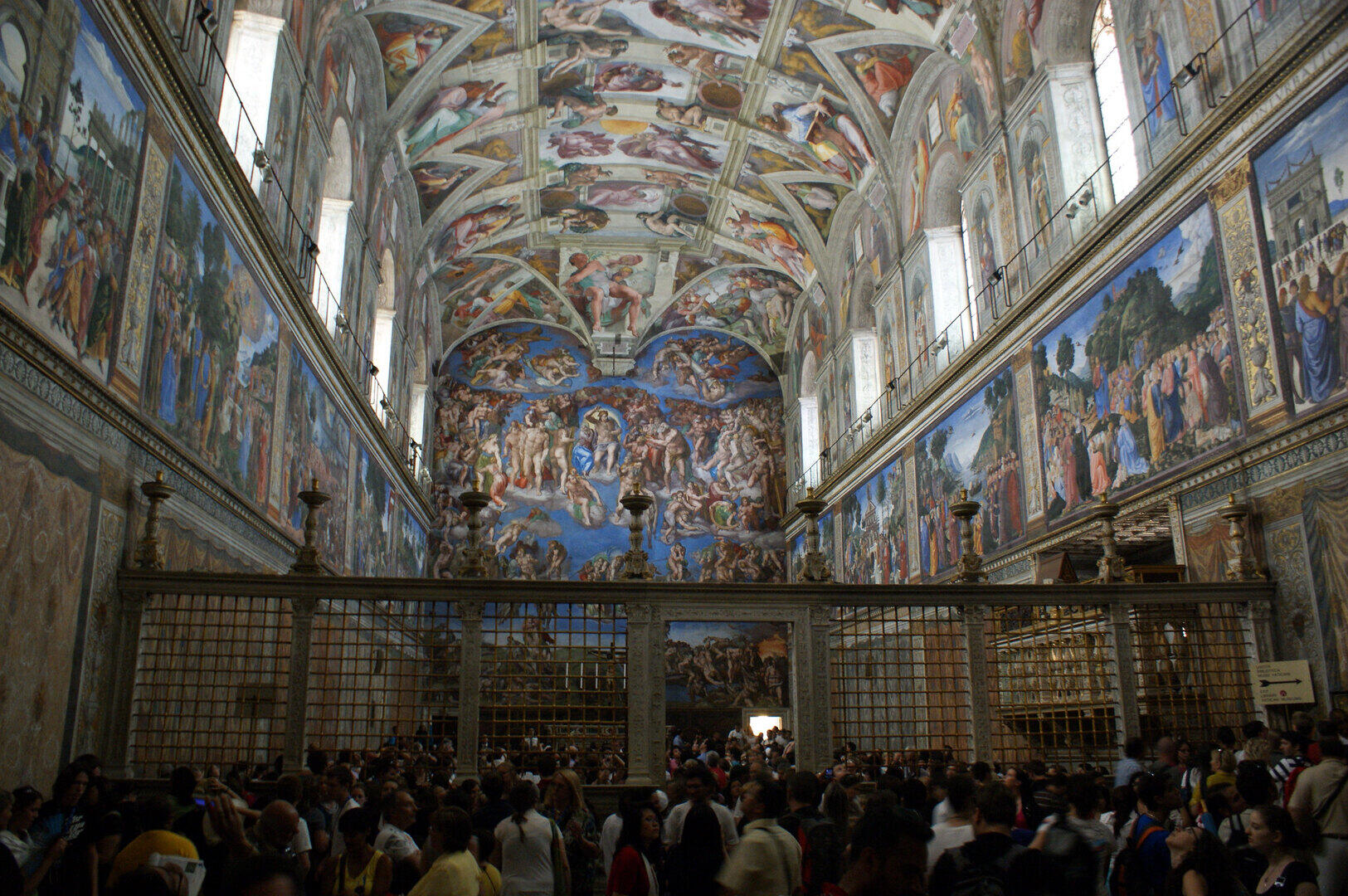
A commanding, dynamic Christ anchors the composition and sets the judgment in motion.
The painting contrasts upward movement of salvation with downward movement of condemnation.
Saints carry recognizable symbols that help viewers identify biblical and early church figures.
Restoration and later modifications reveal the artwork's long and contested reception history.
Figures rotate around Christ in circular energy rather than static horizontal bands.
Fear, hope, grief, and triumph appear simultaneously across the crowded composition.
The work responds to reform-era anxieties and the church's renewed focus on doctrine.
Stepping back helps you read major figure groups and Michelangelo's spatial rhythm.
